The power of person-centred cancer care
We supported All.Can in developing a suite of global materials highlighting the benefits of a person-centred approach to cancer care

Context
Health systems worldwide are facing increasing pressure from workplace shortages and constrained resources – making it essential for leaders and policymakers to rethink how cancer care is delivered.
At the same time, the number of new cancer diagnoses is projected to rise by almost 77% between 2022 and 2050, placing further strain on already overstretched health systems.
Person-centred cancer care puts the needs, preferences and values of people with cancer – and their families and loved ones – at the heart of decision-making. This approach not only improves outcomes and experiences, but also promotes more efficient use of healthcare resources by reducing unnecessary or misaligned interventions.
It is therefore a crucial component of equitable, high-quality, efficient and sustainable cancer care.
Project resources


Case study compendium
Moving from theory to practice: implementing person-centred and efficient cancer care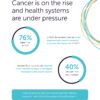
Infographic
The power of person-centred cancer careWhat we’ve achieved
HPP worked with All.Can International’s Person-centred Cancer Care Pathways Taskforce, alongside healthcare professionals, patient advocates and people with lived experience of cancer, to develop a global report outlining opportunities for policy action to support the widespread implementation of person-centred cancer care.
Building on All.Can’s established metrics for efficient cancer care, the report identifies practical opportunities to embed person-centred approaches across the care pathway, supporting decision-makers to design services that improve outcomes, address inequalities and better respond to patient needs. These span improvements in early diagnosis, care coordination, digital innovation and more personalised, holistic support across the cancer pathway.
The report also incorporates personal stories from people directly affected by cancer, highlighting both shortfalls and successes, and illustrating where care could be more closely aligned with individual needs and preferences. To support dissemination and implementation, this work is accompanied by: an infographic summarising key messages from the report; and a case study compendium showcasing best-practice examples of person-centred cancer care initiatives from around the world.
These materials were informed by desk research, interviews with experts and stakeholder consultation.
Collectively, these materials aim to inform and support policy action prioritising person-centred and efficient cancer care across different health system contexts.
To ensure global relevance, the report and case study compendium include examples from Australia, Brazil, Canada, the European Union, Iran, Ireland, Mongolia, Norway, Sweden, the Philippines, the UK and the US.
Key partners and stakeholders
This project was developed with the support of the following partners and stakeholders:
- Dr Matti Aapro, Clinique Genolier, Switzerland
- Evgenia Alexandrova, Association of Cancer Patients (APOZ), Bulgaria
- Dr Anne-Marie Baird, Trinity College Dublin, Ireland
- Professor Nirmala Bhoo-Pathy, Universiti Malaya, Malaysia
- Kelly Butterworth, Roche, Switzerland
- Antonella Cardone, Cancer Patients Europe, Italy
- Professor Alfredo Carrato, Pancreatic Cancer Europe, Spain
- Lenka Christiaens, Johnson & Johnson, Belgium
- Nicolo Conti, Bristol Myers Squibb, Italy
- Christina Dimopoulou, Daiichi Sankyo, Belgium
- Dr Ronald Epstein, University of Rochester School of Medicine and Dentistry, US
- Matt Hickey, Health Value Alliance, UK
- Petya Hristova, Daiichi Sankyo, Germany
- Ebba Hallersjö Hult, Vision Zero Cancer, Sweden
- Madalina Iamandei, All.Can International, Belgium
- Associate Professor Dr Assia Konsoulova, Bulgarian Joint Cancer Network, Bulgaria
- Thanos Kosmidis, CareAcross, UK
- Rosanne Lamplough, Union for International Cancer Control, Switzerland
- Professor Vivienne Milch, Cancer Australia, Australia
- Dr Susannah Morris, Health Consumer Advocate, Australia
- Johan De Munter, University Hospital Ghent, Belgium
- Ivaylo Petrov, Bulgarian Joint Cancer Network, Bulgaria
- Eduardo Pisani, All.Can International, Belgium
- Dr Hadi Abu Rasheed, Qatar Cancer Society, Qatar
- Professor Christobel Saunders, Melbourne University, Australia
- Dr Ambreen Sayani, Women’s College Hospital, Research and Innovation Institute, Toronto; and Dalla Lana School of Public Health, Canada
- Dr Brandon Sheffield, William Osler Health System, Canada
- Professor Smita Srinivas, Honorary Professor, University College London; Visiting Professor, Innogen Institute and Open University, India
- Leah Stephenson, All.Can Canada, Canada
Project funding
HPP’s work on this project was commissioned by All.Can International. All.Can International is a not-for-profit organisation (ASBL) registered in Belgium. The person-centred cancer care pathway project is made possible with financial support from Bristol Myers Squibb, Roche, MSD, Johnson & Johnson, Pfizer, Illumina, Daiichi Sankyo and Astellas.