Taking data to decision-makers: how optimised treatment can reduce potentially avoidable hospitalisations
We developed a roadmap that helps policymakers implement the levers needed to prevent millions of hospital admissions by optimising treatment for five leading chronic conditions

Context
Acute pressures are a longstanding and urgent priority for governments – and reducing them is central to sustainability, meeting public expectations and upholding patient safety.
As populations age, more people are living with chronic conditions, which in turn often drive acute events and hospital admissions. Five of the most common conditions – heart failure, chronic obstructive pulmonary disease (COPD), asthma, type 2 diabetes and hypertension – are often poorly managed. And, as people’s health deteriorates, these become causes of acute events and avoidable hospital admissions.
The Organisation for Economic Co-operation and Development estimates that population ageing will drive a 31% rise in the number of people with chronic conditions in its member countries between 2026 and 2050. Decision-makers urgently need solutions to this challenge.
Much of the answer lies in wider uptake of guideline-directed medical therapy (GDMT) – i.e. pharmacological treatment aligned to the latest scientific consensus. In all of the diseases mentioned above, treatment carefully aligned with guidelines can slow disease progression, reduce complications and keep people out of hospital, making it a tangible policy goal to reduce potentially avoidable hospitalisations.
In reality, care aligned with guidelines can be the exception, not the rule. Health systems face many challenges and barriers. Risk is often identified late; access to key diagnostics and therapies may be limited by capacity, cost and geography; patients may be poorly reviewed and therapies optimised over the long term, and payment systems may reward activity over outcomes.
Project resources
What we’ve achieved
Naturally, more consistent alignment to GDMT lies in how care is organised, funded, staffed and planned. Yet achieving this means securing investment and political commitment, and in a resource-constrained environment, decision-makers may be resistant to the outlay of costs without a better idea of the return. Before this study, evidence on both the level of GDMT uptake and its impact across the conditions and in the different countries was fragmented and incomparable, creating a gap in the evidence for decision-makers to draw on.
The Global PAH Study, designed and run by HealthLumen, addresses this gap, providing decision-makers with robust evidence. The study found that complete uptake of GDMT could prevent a cumulative 14 million hospitalisations across six countries (France, Italy, the Netherlands, Spain, Japan and the US) by 2035, a 32.3% drop compared with current practice. It could also protect over USD $36 million in productivity, avoid 151 million emergency department visits and release 52 million nursing days. Complete uptake is a theoretical scenario, but the benefits also remain meaningful at more realistic, manageable improvement. For example, a 10-percentage-point rise in uptake could potentially avoid 1.8 million hospitalisations. While these data are hugely compelling, they need to be framed in a way that helps decision-makers understand the scale of the problem and, importantly, how it can be addressed.
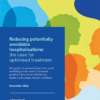
To this end, HPP was tasked with ensuring that the study and its findings, along with key actions to improve healthcare systems, could be easily communicated to decision-makers. The result was a roadmap built around four levers and 15 targeted policy recommendations, each matched to the decision-makers responsible and a time frame for action. An accompanying new policy report also presents the study findings and a roadmap summary.
The accompanying policy report was launched in November 2026 with a panel discussion at ISPOR Europe, where the Global PAH Study’s full findings and methods were also published.
The outputs were developed in close collaboration with the Global PAH study coordinators and the international multidisciplinary Steering Committee.
Key partners and stakeholders
HPP would like to thank the following members of the expert Steering Committee, who contributed their time and insights to the development of the policy report:
- Assoc Prof Sara Allin, Institute of Health Policy, Management and Evaluation, University of Toronto
- Marc Bains, HeartLife Foundation
- Katherine de Bienassis, Organisation for Economic Co-operation and Development (OECD)
- Sung Hee Choe,* FasterCures, Milken Institute
- Dr Stephen Greene, Duke Clinical Research Institute
- Gundula Koblmiller, Austrian Lung Union
* Observer status during Steering Committee meetings.
The Global PAH Study was designed and run by HealthLumen.
- Prof Janwillem Kocks, General Practitioners Research Institute and Observational and Pragmatic Research Institute
- Stefania Maggi, European Interdisciplinary Council on Ageing and Neuroscience Institute, National Research Council
- Prof Elias Mossialos, London School of Economics and Political Science
- Dr Richard Russell, King’s College London
- Kelly Saldaña, ISPOR Institute for Healthcare Transformation
- Prof York Zöllner, Hamburg University of Applied Sciences
Project funding
This non-promotional policy report has been developed and funded by AstraZeneca with input from global experts at four multi-stakeholder policy meetings. The document is intended to provide expert recommendations and accelerate holistic health system reforms to optimise the use of guideline-directed medical therapy to reduce potentially avoidable hospitalisations.