
Action, not words, will help us tackle lung cancer
4 February 2026

Political commitment must translate into earlier detection and better care.
Lung cancer remains the world’s leading cause of cancer-related death. Fortunately, the policy landscape around the disease is undergoing one of the most significant overhauls in decades.
Governments and organisations alike are reassessing how to prevent, detect and manage lung cancer, with new policy commitments that reflect the need for action. This change could transform lung cancer outcomes, meaning more people could live longer if their lung cancer is detected early through screening.
Momentum is building
Last year, several major health policy developments signalled growing political will and clearer strategic frameworks.
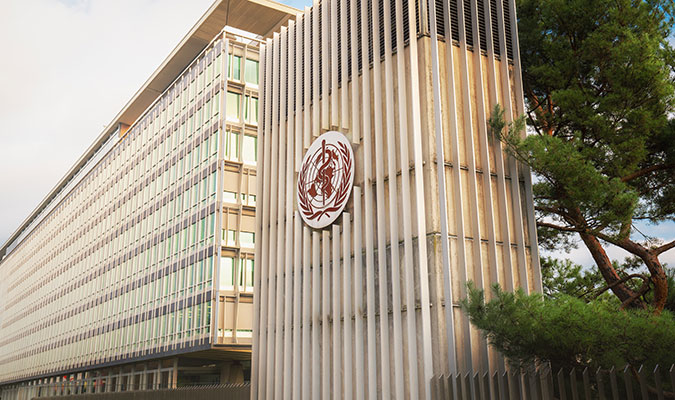
A pivotal moment came in May with the adoption of the first integrated resolution on lung health at the World Health Assembly (WHA). The resolution outlines ambitious goals for lung cancer: to detect it earlier, expand equitable access to diagnosis and treatment, and integrate lung health into national planning.
It calls for coordinated action in prevention, screening and care, emphasising that lung cancer requires sustained and systematic attention. HPP, as Secretariat to the Lung Cancer Policy Network, observed the developments at the WHA to ensure that commitment translated to tangible action; we outlined our position in a formal response to the resolution.



The policy landscape around lung cancer is undergoing one of the most significant overhauls in decades.
Another major driver of momentum is the launch of the IASLC–Lancet Commission on Lung Cancer, an initiative designed to elevate the disease in health systems worldwide. The commission aims to generate high‑value evidence, identify priority policy interventions and support governments in translating commitments into improved survival and quality of care. Its establishment underscores a growing recognition that global, multidisciplinary leadership is essential to achieve progress.
Consensus-building efforts are also expanding regionally. In Asia Pacific, a consensus statement on lung cancer defined shared priorities for earlier detection, screening readiness and equitable access to diagnosis and treatment. As part of a broader programme of activities in the region, the Network participated in the development of the statement and offered a global consensus perspective on behalf of our members. These agreements are emerging as influential levers for shaping policy alignment across diverse health systems.
The remarkable developments of 2025 mark a new era of structured, evidence‑driven and unified action – an era in which lung cancer is finally receiving attention proportional to its devastating impact.
A new focus on risk reduction and earlier detection
Some countries are moving beyond isolated initiatives and toward integrated policy frameworks that focus on risk reduction and earlier detection. These frameworks use a wider set of policy levers – regulatory, financial, organisational and data‑driven – to align efforts in screening, diagnostics, care pathways and population‑level risk reduction.
Governments can deploy these levers in combination. Regulatory action is strengthening environmental and occupational risk‑reduction efforts. Investment and commissioning levers are expanding diagnostic capacity and clarifying referral pathways. And updated cancer control plans are embedding earlier detection targets, equity goals and workforce expectations into long‑term health‑system priorities.
Lung cancer is finally receiving attention proportional to its devastating impact.
These tools help improvements move from pilot‑stage commitments to sustained, system‑level change. For example, England is scaling low‑dose computed tomography screening within a broader policy package designed to reduce diagnostic delays and improve access to high‑quality molecular testing. Malaysia is taking an integrated approach through its lung health roadmap, incorporating lung cancer and other respiratory conditions into a five-year national strategy. These two examples highlight tangible ways to approach the challenge lung cancer poses that could be adapted to other health systems.
Such coordinated approaches reflect a growing consensus – echoed in the Network’s own discussions and evidence reviews – that meaningful progress requires aligning risk reduction, screening and treatment with cohesive national strategies supported by robust, real‑world data. However, progress depends not only on what policies say but on whether they are designed to reinforce one another, support implementation and deliver measurable improvements.
Why policy shifts matter
These promising developments represent far more than incremental progress. They signal a structural shift in how governments and global institutions are approaching lung cancer:
- Lung cancer is increasingly viewed as a challenge for health systems, not just a clinical one.
- Political commitment is strengthening through WHA resolutions, national reforms and global consensus‑building.
- Policymakers are embracing evidence‑informed decision‑making, underpinned by high‑quality research and real-world data.
- Equity is taking centre stage, with a renewed focus on reducing diagnostic delays and improving access for underserved populations.
Sustaining this momentum will require continued investment in evidence generation, implementation support and multidisciplinary collaboration – strategies that HPP and the Lung Cancer Policy Network will continue to champion.
Find out more about the major milestones of 2025 and the Network’s role in them in its annual report, 2025 in review.