

Davos 2026: collaboration as a cornerstone of the global health agenda
2 February 2026

At Davos 2026, important conversations happened about healthcare – and this ‘political theatre’ plays a role in setting the tone for global discourse on health in months to come.
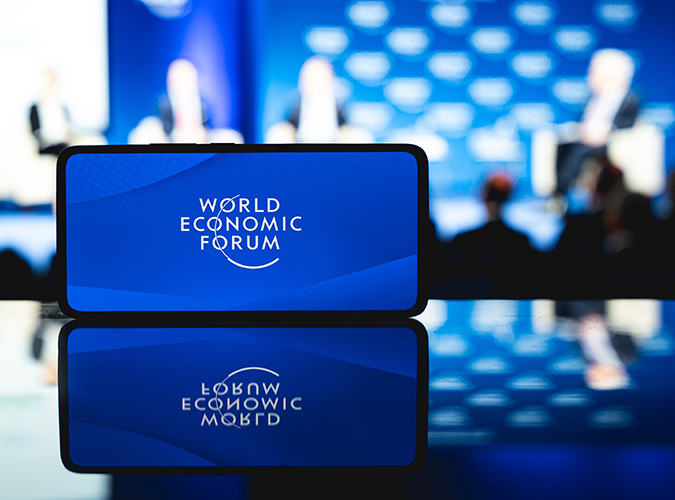
The annual meeting of the World Economic Forum (WEF), colloquially known as ‘Davos’, was held on 19–23 January 2026. Not surprisingly, much of the focus was on how different world leaders responded to the ever-turbulent global stage and shifts in political power. And yet important conversations were also had about healthcare – and this ‘political theatre’ plays a role in setting the tone for global discourse on health in months to come.
A spirit of dialogue
The theme for Davos this year was ‘A spirit of dialogue’, which seems appropriate for this unique convening of international stakeholders from across government, business, civil society and academia. For health, key takeaways from the discussions were the need for greater collaboration, fostering of innovation and long-term policy thinking that transcends political cycles. Everyone seemed to recognise that sustained investment in health systems’ resilience and innovation can prepare healthcare for challenges to come.
A call for collaboration, with urgency
Dr Tedros Adhanom Ghebreyesus, Director-General of the World Health Organization, ignited urgency into the call for global collaboration in his opening remarks. He spoke about how the first two decades of the 21st century have seen dramatic developments in global health – maternal mortality has reduced by 40%, childhood mortality by over 50% and deaths due to HIV and malaria by over 60% and 30% respectively. However, advances in health are stalling. The cutting of foreign aid, spearheaded by the withdrawal of US funds from USAID and other international aid organisations, is a key factor in delays in achieving Sustainable Development Goal 3.8 – securing universal health coverage for all – and in ensuring access to innovations in countries that need them most. The Director-General named non-communicable diseases (NCDs), mental health conditions and antimicrobial resistance as ever-looming threats, compounded by the climate crisis and the ongoing danger of future pandemics. He urged global leaders to act collaboratively, as pooling resources and acting in solidarity in cross-border efforts benefits everyone.



Key takeaways for health were the need for greater collaboration, fostering of innovation and long-term policy thinking that transcends political cycles.
NCDs: the need to act early
A staggering 75% of deaths worldwide are attributed to NCDs. No country is spared, although the burden is being felt increasingly in low- and middle-income countries, which account for 82% of premature deaths from NCDs. A strong theme throughout Davos was the need to take a preventive and proactive approach: from cancer to memory care, tackling a problem early that promises steep increases in healthcare costs was emphasised over and over. Stakeholders urged us to think ‘Why spend money on treating the problem when you could invest in tackling the root cause?’. The sobering statistic that only 3% of health budgets are spent on prevention was reiterated, even though we know investments in prevention can result in up to fourteen-fold returns.
Leaders noted that prevention is only effective when engaging in preventive behaviours is second nature. Endless messaging about eating healthier, quitting smoking and moving more won’t achieve much if policy doesn’t adapt to address the social determinants that can block people from engaging in these behaviours. Financial incentives for effective prevention were proposed as a possible measure, with population-based funding streams suggested as a way to encourage collaboration in prevention activities to maximise their impact. This flips the script of treatment reimbursement – to rewarding health systems for reducing the number of people that engage with them in the first place.
Collaboration to tackle NCDs is key – between private, non-profit and public sector health actors, but also between health and other sectors; fragmentation of resource utilisation makes this already uphill battle nearly impossible to win. The resounding messaging in tackling NCDs was multisectoral collaboration and openness to sharing innovations in order to accelerate progress.
Antimicrobial resistance: the next public health crisis
Not for the first time, several speakers raised the alarm on antimicrobial resistance at Davos – and with good reason. Since the discovery of penicillin by Alexander Fleming in 1928, people are no longer condemned to die from a simple bacterial infection. Yet the efficacy of antimicrobials is worsening due to misuse and overprescribing, causing increasing antimicrobial resistance – which could reverse this pillar of medical progress. The scale of this threat is considerable: our health systems, food chains and economies rely on being able to supress the impact of bacterial infections.
As part of the lead-up to Davos this year, 50 global organisations backed a call to action to improve the reaction to antimicrobial resistance. Bacteria don’t recognise borders, so international collaboration is imperative to manage and reduce the impact. Using the call to action as a basis for discussions, stakeholders identified innovative antimicrobials and vaccines, increased global awareness and behaviour change, and a shift in the use of antimicrobials in food systems as key actions to reduce their growing resistance to antibiotics. Conversations also pushed for market-shaping policies, such as pull incentives, subscription models and guaranteed procurement, as a way to revitalise antimicrobial development pipelines.
Financial incentives for effective prevention would flip the script of treatment reimbursement – to rewarding health systems for reducing the number of people that engage with them in the first place.
A call for innovation to solve big problems
AI and innovative digital technologies were at the forefront of many discussions at Davos, with considerations ranging from national security to climate change and improving access. Technological advances that can increase health system capacity in the face of growing workforce shortages were also centre stage, with interconnected electronic medical records, open health data systems, administrative AI agents and agentic systems all lauded as solutions to respond to different challenges. The potential for AI to push healthcare forward was also discussed, with suggestions to use it to combat antimicrobial resistance, to increase the earlier detection of cancer, and to assist in developing rapid, cutting-edge personalised medicines. Investment in innovations in early detection and targeted treatments can not only result in better health outcomes, it can also help reduce wastage while expanding access to care.
As well as technological innovation, stakeholders emphasised the potential of innovative partnerships. Many lamented that policy is often limited by the short-term outlook of governments, which means issues that require a long-term vision – such as preventive healthcare – are avoided in favour of problems that have a ‘quick solve’. Leaders emphasised the importance of bringing together experts from all different walks of life to facilitate holistic policy action that has long-term impact.
Health for all and all for health
Many of the conversations at Davos were centred around the economic value of investing in health, in terms of protecting the financial resilience of health systems and encouraging the promotion of healthy behaviours to facilitate economic productivity. But assessing health purely in economic terms misses a vital point. In a world with growing political and financial uncertainty, having good health translates into financial security, higher quality of life and being able to contribute to society on all fronts. At the population level, this means greater societal wellbeing, social participation, social cohesion and social capital. The prize is so great that it warrants collaboration – with everyone to gain.