
Overview
Genetic testing is increasingly vital to how cardiomyopathy is diagnosed and treated. In 2025, the International Cardiomyopathy Network (ICoN) identified this area as a priority focus for its mission, and asked HPP to build a clear European policy case and engagement strategy for genetic testing in the context of the evolving EU Safe Hearts Plan. Working with ICoN’s clinical and patient experts, we produced two policy resources and a 2026–2027 engagement strategy that will form the basis of future work.

Professor Perry Elliott, Director, UCL Institute of Cardiovascular Science & British Heart Foundation Centre of Research Excellence; Vice President, European Society of Cardiology
The challenge
Genetic testing is becoming central to diagnosing and caring for people with cardiomyopathy. It can distinguish conditions that look alike, identify relatives at risk, and guide preventive and targeted treatment. It also helps health systems use their resources efficiently. Yet only 37% of adults with cardiomyopathy in Europe receive it.
ICoN had previously identified access to genetic testing as a key organisational policy goal in 2023. In 2025, the emerging EU Safe Hearts Plan offered an opportunity to secure EU funding and collaboration in this vital field. To fully seize the opportunity, ICoN needed to turn a complex, specialist subject into a compelling policy case, complete with practical asks based on EU precedent and competencies, while keeping pace with a fast-moving debate.
What we achieved
HPP supported ICoN to identify and plan its strategic direction as EU policy moved quickly. We kept members up to date on emerging opportunities and gave them a strategic analysis and clear plan of action to advance ICoN’s stated policy goals.
The project also produced two public resources:
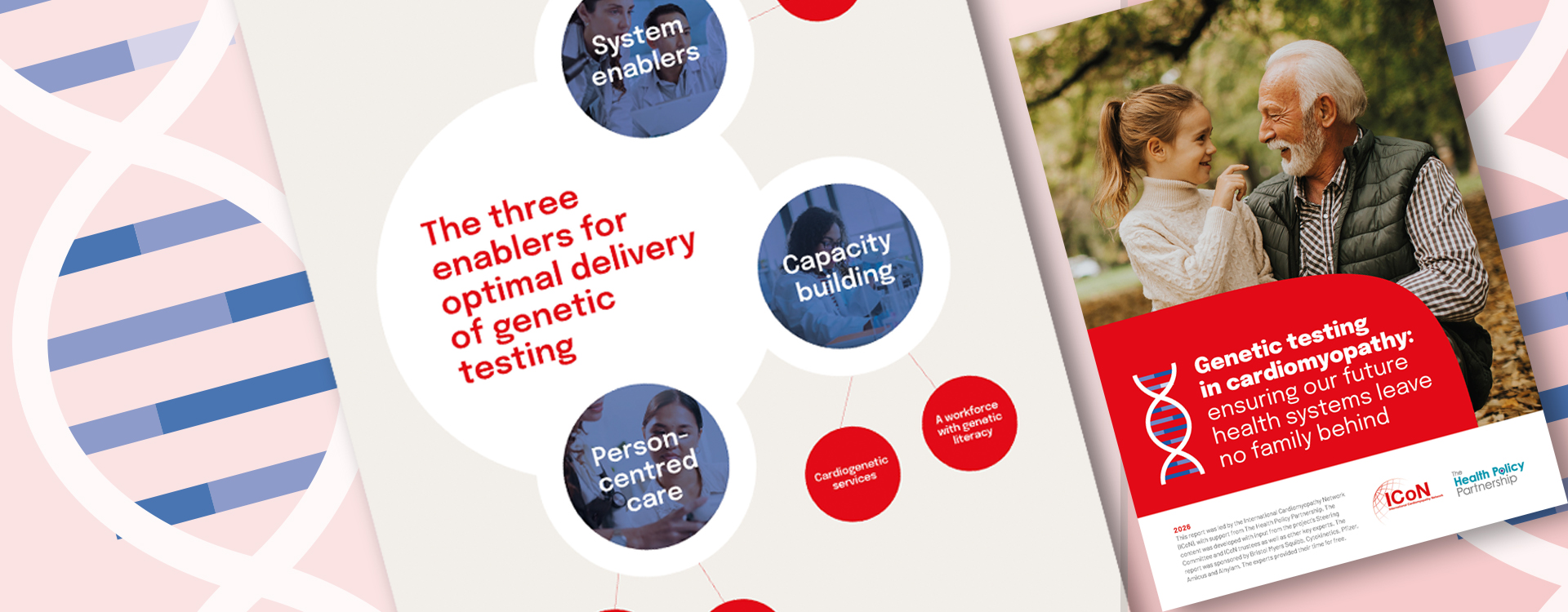
- Genetic testing in cardiomyopathy: ensuring our future health systems leave no family behind. This policy paper is the evidence base for a longer-term campaign (2026–28). Drawing on research, 12 expert interviews and a survey covering 12 European countries, it shows the benefits of genetic testing, where access falls short and the three things needed to deliver it well: system enablers, capacity building and person-centred care.
- Genetic testing in cardiomyopathy: recommendations for the European Union. This short call to action sets out meaningful steps the EU can take through its existing programmes and competencies, such as EU4Health, the European Health Data Space, expert centre networks and the Safe Hearts Plan. It is designed to evolve with EU cardiovascular policy.
Both resources have been endorsed by 13 organisations, including national cardiac societies, patient organisations and the World Heart Federation. Together, they give ICoN and its partners a compelling case for change and a practical basis for engaging European policymakers.
Core resources
2023 manifesto
Manifesto for the future of cardiomyopathy careProject information
The project was initiated by ICoN, with support from HPP. The Steering Committee brought together expertise from:
- the Belgian Society of Cardiology
- the European Society of Cardiology Council on Cardiovascular Genomics
- the UCL Centre for Heart Muscle Disease
- the Expert Center for Rare Cardiovascular Genetic Diseases in Romania
- Erasmus Medical Center
- Cardiomyopathy UK
- the Nikos Protonotarios Association for Rare Cardiovascular Disease Care and Prevention
- the German Heart Center at the Technical University of Munich
The wider evidence-gathering process involved healthcare professionals with experience in cardiomyopathy and cardiovascular genetics, alongside people living with cardiomyopathy and members of affected families. National survey responses were received from 12 European countries. The Steering Committee guided the publications and validated the project findings.
HPP was commissioned directly by ICoN, a UK-based registered not-for-profit organisation with global scope. All contributing experts provided their time without charge.
Get in touch
If you would like to find out more about our work on cardiovascular genetics, cardiomyopathy or European health policy, contact Ed Harding, Founder.

Related work
Project

Achieving early detection and diagnosis of cardiovascular disease
Project

